To Float with the Tide or Swim for the Goal
April 22, 1958
57 Perry Street
New York CityDear Hume,
You ask advice: ah, what a very human and very dangerous thing to do! For to give advice to a man who asks what to do with his life implies something very close to egomania. To presume to point a man to the right and ultimate goal— to point with a trembling finger in the RIGHT direction is something only a fool would take upon himself.
I am not a fool, but I respect your sincerity in asking my advice. I ask you though, in listening to what I say, to remember that all advice can only be a product of the man who gives it. What is truth to one may be disaster to another. I do not see life through your eyes, nor you through mine. If I were to attempt to give you specific advice, it would be too much like the blind leading the blind.
“To be, or not to be: that is the question: Whether ’tis nobler in the mind to suffer the slings and arrows of outrageous fortune, or to take arms against a sea of troubles … ” (Shakespeare)
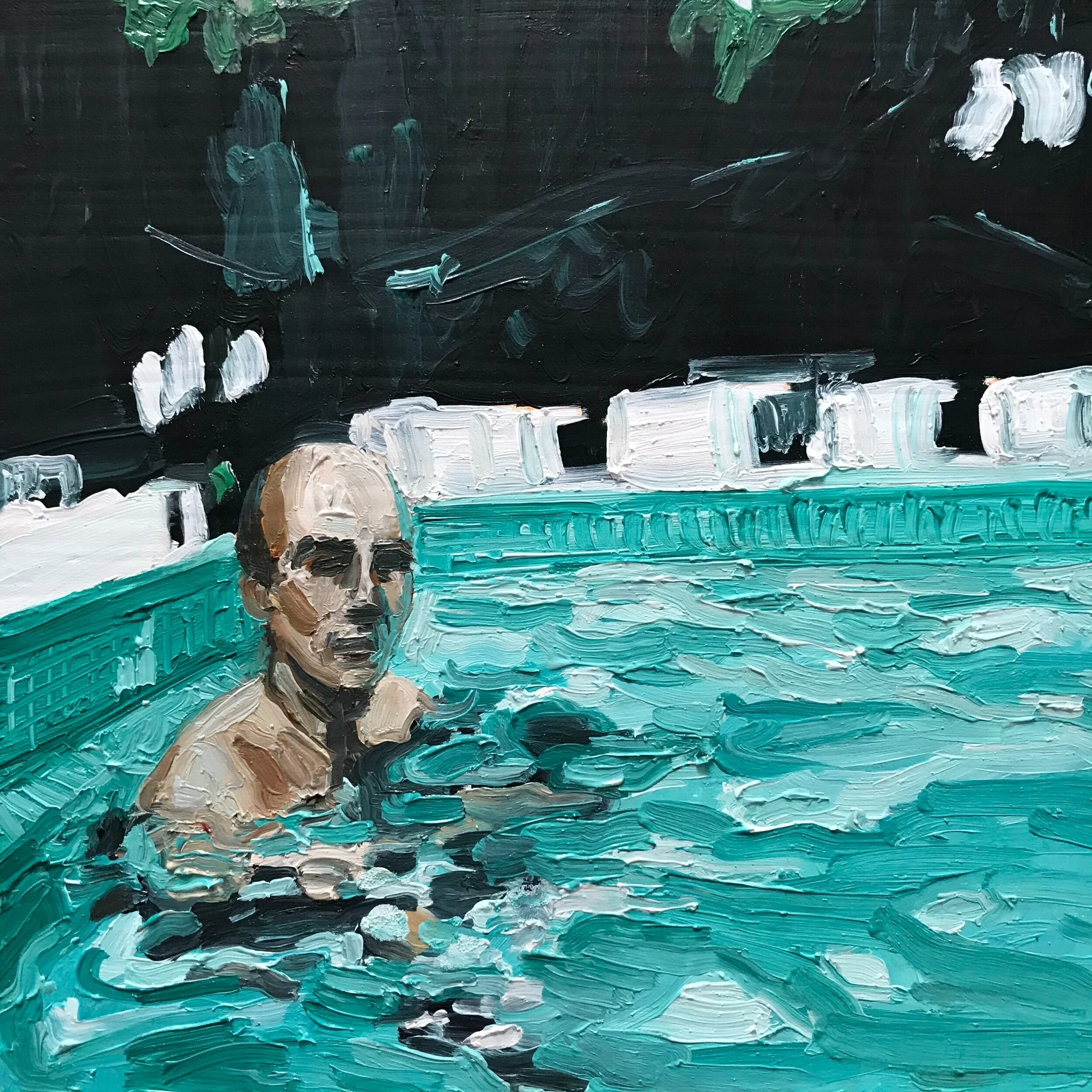
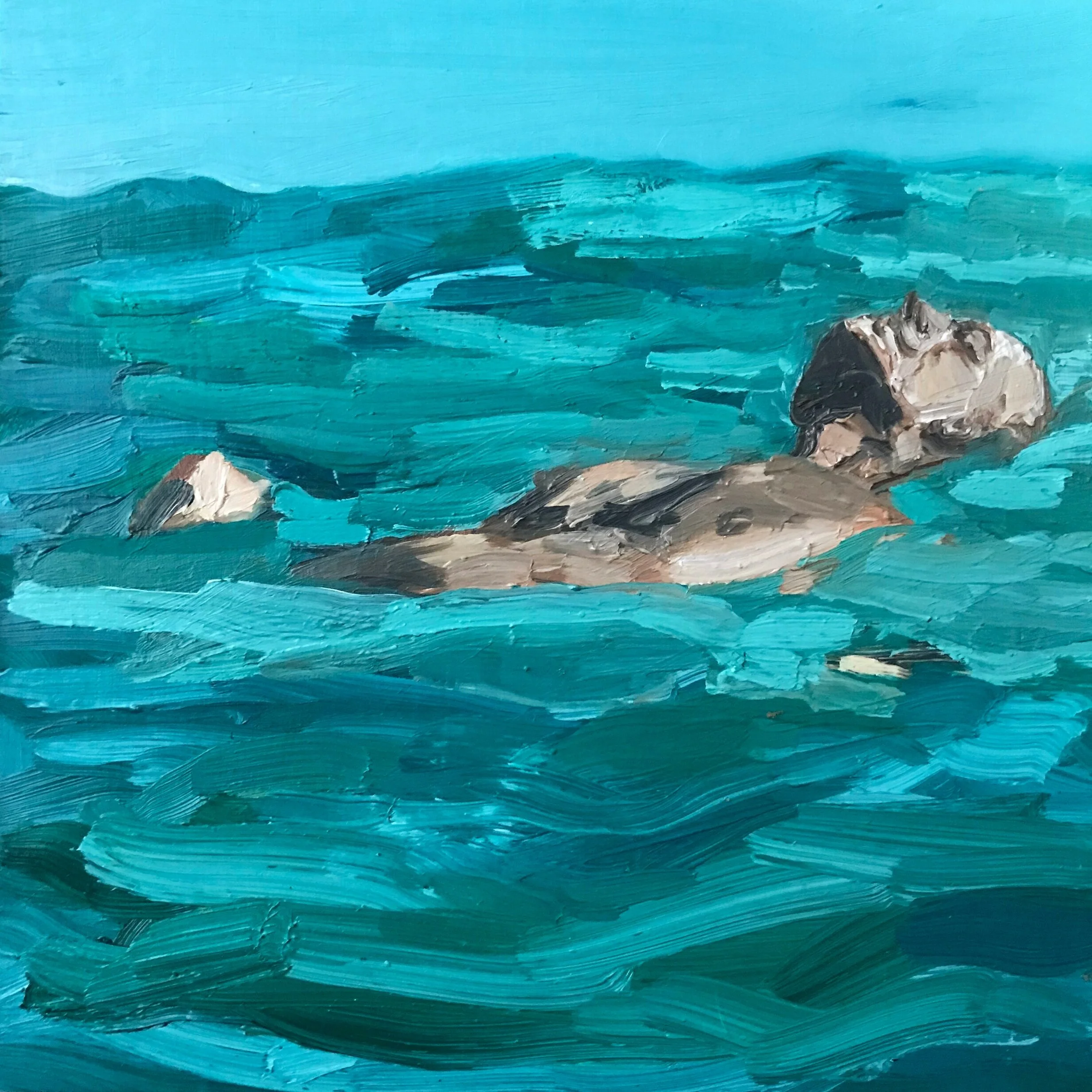
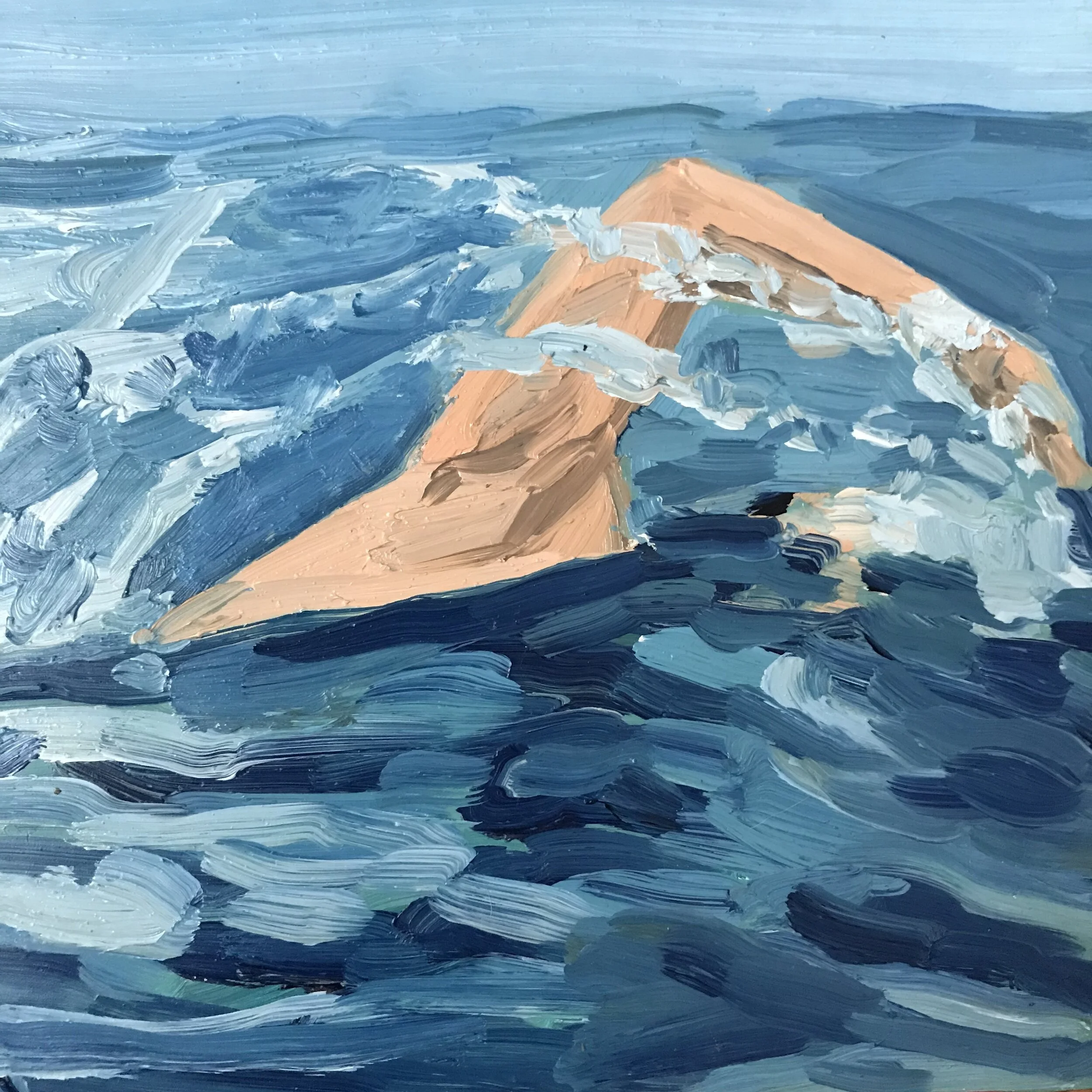
And indeed, that IS the question: whether to float with the tide, or to swim for a goal. It is a choice we must all make consciously or unconsciously at one time in our lives. So few people understand this! Think of any decision you’ve ever made which had a bearing on your future: I may be wrong, but I don’t see how it could have been anything but a choice however indirect— between the two things I’ve mentioned: the floating or the swimming.
But why not float if you have no goal? That is another question. It is unquestionably better to enjoy the floating than to swim in uncertainty. So how does a man find a goal? Not a castle in the stars, but a real and tangible thing. How can a man be sure he’s not after the “big rock candy mountain,” the enticing sugar-candy goal that has little taste and no substance?
The answer— and, in a sense, the tragedy of life— is that we seek to understand the goal and not the man. We set up a goal which demands of us certain things: and we do these things. We adjust to the demands of a concept which CANNOT be valid. When you were young, let us say that you wanted to be a fireman. I feel reasonably safe in saying that you no longer want to be a fireman. Why? Because your perspective has changed. It’s not the fireman who has changed, but you. Every man is the sum total of his reactions to experience. As your experiences differ and multiply, you become a different man, and hence your perspective changes. This goes on and on. Every reaction is a learning process; every significant experience alters your perspective.
So it would seem foolish, would it not, to adjust our lives to the demands of a goal we see from a different angle every day? How could we ever hope to accomplish anything other than galloping neurosis?
The answer, then, must not deal with goals at all, or not with tangible goals, anyway. It would take reams of paper to develop this subject to fulfillment. God only knows how many books have been written on “the meaning of man” and that sort of thing, and god only knows how many people have pondered the subject. (I use the term “god only knows” purely as an expression.) There’s very little sense in my trying to give it up to you in the proverbial nutshell, because I’m the first to admit my absolute lack of qualifications for reducing the meaning of life to one or two paragraphs.
I’m going to steer clear of the word “existentialism,” but you might keep it in mind as a key of sorts. You might also try something called Being and Nothingness by Jean-Paul Sartre, and another little thing called Existentialism: From Dostoyevsky to Sartre. These are merely suggestions. If you’re genuinely satisfied with what you are and what you’re doing, then give those books a wide berth. (Let sleeping dogs lie.) But back to the answer. As I said, to put our faith in tangible goals would seem to be, at best, unwise. So we do not strive to be firemen, we do not strive to be bankers, nor policemen, nor doctors. WE STRIVE TO BE OURSELVES.
But don’t misunderstand me. I don’t mean that we can’t BE firemen, bankers, or doctors— but that we must make the goal conform to the individual, rather than make the individual conform to the goal. In every man, heredity and environment have combined to produce a creature of certain abilities and desires— including a deeply ingrained need to function in such a way that his life will be MEANINGFUL. A man has to BE something; he has to matter.
As I see it then, the formula runs something like this: a man must choose a path which will let his ABILITIES function at maximum efficiency toward the gratification of his DESIRES. In doing this, he is fulfilling a need (giving himself identity by functioning in a set pattern toward a set goal), he avoids frustrating his potential (choosing a path which puts no limit on his self-development), and he avoids the terror of seeing his goal wilt or lose its charm as he draws closer to it (rather than bending himself to meet the demands of that which he seeks, he has bent his goal to conform to his own abilities and desires).
In short, he has not dedicated his life to reaching a pre-defined goal, but he has rather chosen a way of life he KNOWS he will enjoy. The goal is absolutely secondary: it is the functioning toward the goal which is important. And it seems almost ridiculous to say that a man MUST function in a pattern of his own choosing; for to let another man define your own goals is to give up one of the most meaningful aspects of life— the definitive act of will which makes a man an individual.
Let’s assume that you think you have a choice of eight paths to follow (all pre-defined paths, of course). And let’s assume that you can’t see any real purpose in any of the eight. THEN— and here is the essence of all I’ve said— you MUST FIND A NINTH PATH.
Naturally, it isn’t as easy as it sounds. You’ve lived a relatively narrow life, a vertical rather than a horizontal existence. So it isn’t any too difficult to understand why you seem to feel the way you do. But a man who procrastinates in his CHOOSING will inevitably have his choice made for him by circumstance.
So if you now number yourself among the disenchanted, then you have no choice but to accept things as they are, or to seriously seek something else. But beware of looking for goals: look for a way of life. Decide how you want to live and then see what you can do to make a living WITHIN that way of life. But you say, “I don’t know where to look; I don’t know what to look for.”
And there’s the crux. Is it worth giving up what I have to look for something better? I don’t know— is it? Who can make that decision but you? But even by DECIDING TO LOOK, you go a long way toward making the choice.
If I don’t call this to a halt, I’m going to find myself writing a book. I hope it’s not as confusing as it looks at first glance. Keep in mind, of course, that this is MY WAY of looking at things. I happen to think that it’s pretty generally applicable, but you may not. Each of us has to create our own credo— this merely happens to be mine.
If any part of it doesn’t seem to make sense, by all means call it to my attention. I’m not trying to send you out “on the road” in search of Valhalla, but merely pointing out that it is not necessary to accept the choices handed down to you by life as you know it. There is more to it than that— no one HAS to do something he doesn’t want to do for the rest of his life. But then again, if that’s what you wind up doing, by all means convince yourself that you HAD to do it. You’ll have lots of company.
And that’s it for now. Until I hear from you again, I remain,
your friend,
Hunter
Above, I’ve included the text from a letter written by Hunter S. Thompson at the age of 22. I found this letter when I was myself about age 18 or 19, included in the book, “The Proud Highway: Saga of a Desperate Southern Gentleman”, a collection of Hunter’s letters from 1955-1967. He charted his own path out of destitution and disappointment largely due to his determined self assuredness in his own talents, and from that he forged a life that defied most all human and earthly odds. I was enduring my own sense of southern desperation at the time that I connected with those letters, and the book served as a beacon of hope that I kept as close as a bible for many years. It reinforced and encouraged the feeling that something could give way from what seemed like a hallway of dead ends of trying to create a life for myself. As he wrote upon stumbling into his “Gonzo” journalism, “It was like falling down an elevator shaft and landing in a pool of mermaids.” I hung tightly to the possibility that taking groundless leaps into the unknown could actually provide me with an endless source of thrill and fulfillment.
From this letter in particular, I gathered a couple of mantras, “To float with the tide, or swim for the goal?”, and “a man who procrastinates in his choosing will inevitably have his choice made for him by circumstance.”
Our lives are defined and built by our choices, so it is essential that we learn to navigate our choices skillfully. When to float, when to swim…When to surrender to the flow, and when to push. At the soul of this contemplation, is our ability to fluidly engage our capacities with both masculine and feminine energy. The masculine creates structure and engages and asserts our force of will. The feminine allows for yielding and receptivity, bringing us into a spaciousness that allows us to connect to our intuitive knowing. The watery energy of the sacral chakra which contains our feelings and creative seed must meet the fire of the solar plexus in action, which requires a confidence and determination to engage… this continues in a constant balancing act, to not become too watery to burn out the fire…not too firey to dry up the well. We must be spacious enough to allow the input, connecting to our knowing and intuition and awareness of self, and we must cultivate the energy to create the output, the expression and actions that drive us forward in a desired direction.
Most human beings will struggle to strike this balance.
Some may find themselves so much more comfortable in the floating and space of surrender, that their life will be moved without any input from their own volition… their choices are made for them by the circumstances of the people around them and whatever environmental factors they find themselves in. This would be someone who feels like their life is happening “to them”. They do not feel connected to their own power of choice or confident in recognizing or valuing their own desires.
On the other hand, some may try to push and press and squash and trample their way forward with brute force without taking the time to see if they are even still connected to their purpose and desires for themselves. This might be someone who wills themselves to a certain benchmark or accomplishment, but then find it does not fulfill them upon arrival. They were connected to the image of a goal, rather than a deep knowing of themselves.
So…how do we get to a deep knowing of ourselves? Like any relationship, it takes time and energy and listening and communicating to build understanding. We must learn the language of our bodies, and listen for the voice of our soul which shares itself in many ways. Then we build the confidence to trust that inner knowing for a sense of direction, and engage our capacity and power of choice to act on that. This is the way to sculpt our lives to reflect our desires and our values and to have our goals suit who we are, we can create the pool of mermaids by design as well as train ourselves to expect serendipitous miracles of all kinds, building upon trust and faith in our internal guidance.
For an exercise on creating a compass of our own value system and peeling apart our beliefs from the conditioned beliefs and values of our society, families, etc. and a direct path to creating deeper bodily awareness and knowing… please look into Breathwork for Autonomy which takes a deep dive into building our volition from the inside out.